

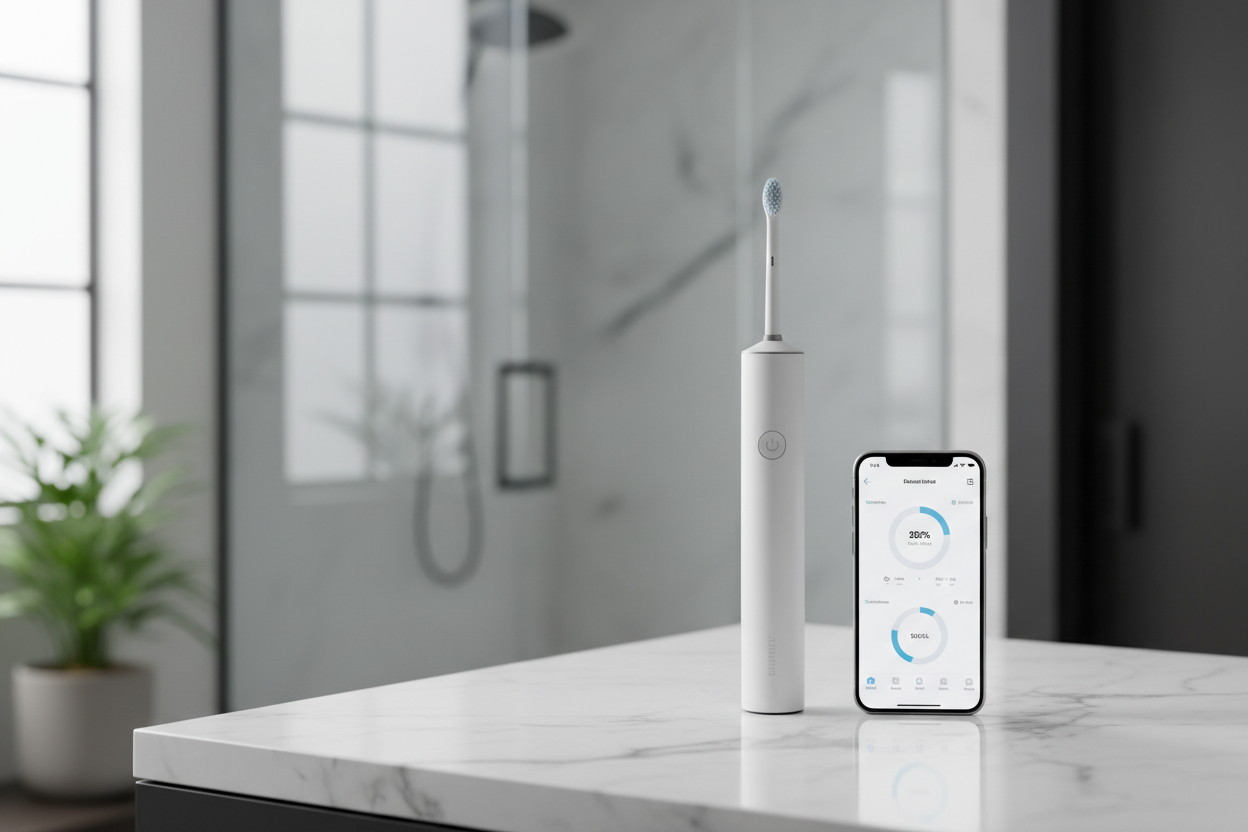
Remember when a toothbrush was just… a toothbrush? Bristles, handle, done. Then came electric – a solid upgrade. But now? Your toothbrush is getting smarter than your first smartphone.
Welcome to connected oral care – and it's changing the way we brush, track, and actually improve our oral health.
📈 Why Smart Toothbrushes Are Everywhere
The numbers tell the story. The global smart toothbrush market is projected to grow from $1.32 billion in 2025 to $2.68 billion by 2031, at a CAGR of over 12%. AI-powered toothbrushes alone are growing at nearly 14.4% annually.
In Indonesia, electric toothbrush adoption is climbing fast – penetration is expected to reach 10–15% of households, driven by more affordable entry-level models and wider e‑commerce availability.
This isn't a niche tech toy anymore. It's going mainstream.
🦷 Smart vs Regular Electric – What's the Real Difference?
Both remove more plaque than manual brushes. But smart brushes add a layer that regular electrics don't: data.
A regular electric brush vibrates. A smart brush watches.
Smart toothbrushes come with:
-
Pressure sensors – warn you when you're scrubbing too hard (goodbye, receding gums)
-
Bluetooth connectivity – syncs with an app to track every session
-
AI-powered guidance – gives real-time feedback on your technique
-
Coverage mapping – shows exactly where you brushed – and where you missed
It's like having a dental hygienist watching over your shoulder, without the awkward silence.
📱 What the App Actually Does (It's Not Just a Gimmick)
Here's where it gets interesting. The app doesn't just track time – it tracks quality.
It analyses:
-
Brushing duration and frequency
-
Pressure applied to each area
-
Coverage across 16 regions of your mouth
-
Consistency over days and weeks
One study found that AI-enabled toothbrushes paired with app-based monitoring can significantly improve periodontal therapy outcomes by enhancing adherence and performance of oral hygiene. Another pilot study showed a significant decrease in oral hygiene indices among smart toothbrush users compared to a control group.
The data doesn't lie – and neither does your brush.
🔍 Does It Actually Lead to Better Oral Health?
The evidence is building. Electric brushes are proven to remove more plaque and reduce gingivitis better than manual ones. Smart brushes add the behavioural layer – they help you brush better, not just longer.
That said, some research suggests the app layer hasn't clearly outperformed standard electric brushes in every metric. But here's the catch: most people don't brush correctly. The real value of a smart brush isn't the motor – it's the coaching.
If you already brush perfectly (congratulations, you're a rare breed), a regular electric might be enough. But for the other 99% of us? The feedback loop changes everything.
💡 How to Choose the Right Smart Toothbrush
Before you buy, ask yourself:
1. What do I actually need?
-
Sensitive gums? Look for a pressure sensor.
-
Bad at reaching the back? Go for one with coverage mapping.
-
Just want to build a habit? Timer and basic tracking might be enough.
2. Does the app work for me?
Not all apps are created equal. Check reviews – is it intuitive? Does it actually give useful feedback, or just collect data?
3. What's my budget?
Prices range from affordable entry-level to premium devices exceeding IDR 1 million. More expensive doesn't always mean better – match features to your actual needs.
4. Do I care about ecosystem?
Some brands connect toothbrushes, water flossers, and even toothpaste into one oral health ecosystem. If you like things that talk to each other, this might matter.
The Bottom Line
Connected oral care isn't about replacing your dentist – it's about making every brush count. Smart toothbrushes turn a mindless routine into a measurable habit. They don't just clean your teeth; they teach you how to clean them better.
And in a world where we track everything from sleep to steps – why wouldn't we track our oral health too?
Have you tried a smart toothbrush yet? Would you trust an app to tell you how to brush? Let me know below! 🪥📱
Share:
What If Your Mouth Told You What's Wrong With Your Body?
Clean Beauty 2.0 – Why "Free-From" Isn't Enough Anymore